ଉତ୍ପାଦ ସୂଚନାକୁ ଯାଆନ୍ତୁ
1 ର 7

Pranam

Ketaki Joha Rice – Traditional Rice from Kalahandi, Odisha

Ketaki Joha Rice – Traditional Rice from Kalahandi, Odisha

ଦ୍ୱାରା ତିଆରି :Pranam

ନିୟମିତ ମୂଲ୍ୟ Rs. 130.00
ନିୟମିତ ମୂଲ୍ୟ ବିକ୍ରୟ ମୂଲ୍ୟ Rs. 130.00
Price (Incl. of all taxes)
Ketaki Joha Rice from Kalahandi, Odisha — a traditional unpolished rice variety valued for its soft, slightly sticky and naturally cohesive texture after cooking. Its ability to blend beautifully with the flavours of a meal makes it especially suited to dal, Dalma, vegetables, traditional curries and everyday home-style cooking.
କର ଅନ୍ତର୍ଭୁକ୍ତ। Shipping calculated at checkout.
Pack
ପରିମାଣ
  • ୧୦୦% ସୁରକ୍ଷିତ ପେମେଣ୍ଟଗୁଡ଼ିକ
  • ₹୪୯୯ ରୁ ଅଧିକ ଜିନିଷ କିଣିଲେ ମାଗଣା ସିପିଂ
  • ସହଜ ଫେରସ୍ତ
  • Cash on Delivery Option Available
  • Traditionally Processed
  • Farmers-led
ସମ୍ପୂର୍ଣ୍ଣ ବିବରଣୀ ଦେଖନ୍ତୁ

Ketaki Joha Rice – Soft, Comforting Rice from Kalahandi, Odisha

Ketaki Joha Rice is a traditional rice variety Unpolished cultivated and sourced from Kalahandi, Odisha. Also known as Keteki Joha, this rice belongs to the wider family of rice varieties commonly referred to as Joha.

What makes Ketaki Joha particularly appealing for everyday meals is its cooking texture. Once cooked, the grains become soft, slightly sticky and naturally cohesive, allowing the rice to blend comfortably with dal, vegetables and flavourful curries.

Rather than remaining highly separate and dry after cooking, Ketaki Joha develops a softer consistency that works particularly well with Dalma, dal, traditional vegetable preparations and home-style Indian curries.

Important Origin Clarification

Keteki Joha is a delicate aroma and distinctive taste variety from odisha. Keteki Joha is an improved aromatic rice variety, valued for its fragrance and medium-slender grain. An original grain of Assam, cultivated at Kesinga and M Rampur of Kalahandi. Our naturally Unpolished Keteki Joha is positioned for customers who want premium aromatic rice with the goodness of the grain retained.

This rice is also called “Low Carbon Rice”, which is collected from specific farmers working on “Better Rice Initiatives” (BRI) platform, following the “Alternate Wetting and Drying” (AWD) methodology to reduce methane gas emissions from rice fields, which impacts society and environment.

Ketaki Joha is a specific rice variety, while “Joha Rice” refers to a broader group of rice varieties traditionally associated with Assam.

Assam’s Joha Rice has a registered geographical indication (GI). This particular Ketaki Joha Rice, however, is cultivated and sourced from Kalahandi, Odisha.

It should therefore be presented as Odisha-grown Ketaki Joha Rice and not as Assam GI-tagged Joha Rice.

Key Features

  • Ketaki / Keteki Joha rice variety
  • Cultivated in Kalahandi, Odisha
  • Soft cooked texture
  • Slightly sticky and naturally cohesive
  • Complements flavourful gravies and curries
  • Suitable for regular household meals
  • Particularly suited to traditional Odisha food combinations

Origin: Kalahandi District, Odisha, India

Variety: Ketaki Joha / Keteki Joha

Ketaki Joha Rice offered here is cultivated and sourced from Kalahandi in western Odisha.

The product represents an Odisha-grown expression of the Ketaki Joha variety and is intended for consumers looking for traditional rice with a softer, more cohesive cooking character.

Origin Transparency

✓ Grown/Sourced From: Kalahandi, Odisha
✓ Variety: Ketaki Joha
✕ Not marketed as: Assam GI Joha Rice

Producer: Pranam Prakalpa

Location: Kalahandi, Odisha

Product: Ketaki Joha Rice.

This Ketaki Joha Rice is sourced from Kalahandi, Odisha. The producer works with the traditional rice variety before the grain is cleaned, processed and packed for household use.

From Paddy to Ketaki Joha Rice

1. Cultivation
Ketaki Joha paddy is cultivated in Kalahandi, Odisha.

2. Harvesting
Mature paddy is harvested after the crop reaches the appropriate stage.

3. Drying
Harvested paddy is dried to prepare the grain for storage and processing.

4. Cleaning
The paddy is cleaned to remove field impurities and unwanted material.

5. Milling
The outer husk is removed to obtain edible rice grains.

6. Sorting & Grading
Rice grains are sorted and prepared for retail packing.

7. Packing
The finished rice is weighed, packed and labelled for sale.

Everyday Benefits

Soft & Comforting Texture
Ketaki Joha develops a soft and pleasantly cohesive texture when cooked, making it suitable for comforting everyday meals.

Pairs Well With Gravies
Its slightly sticky character allows dal, Dalma and curry gravies to combine naturally with the rice.

Traditional Meal Experience
A useful choice for households wanting to explore a traditional Odisha-grown rice variety.

Versatile Everyday Rice
Suitable for lunch or dinner alongside a variety of Indian home-style dishes.

Everyday Uses

  • Rice with Dalma
  • Rice with dal
  • Vegetable curries
  • Traditional Odisha curries
  • Home-style Indian meals
  • Rice with saag
  • Rice with mixed vegetables
  • Comfort-style rice meals

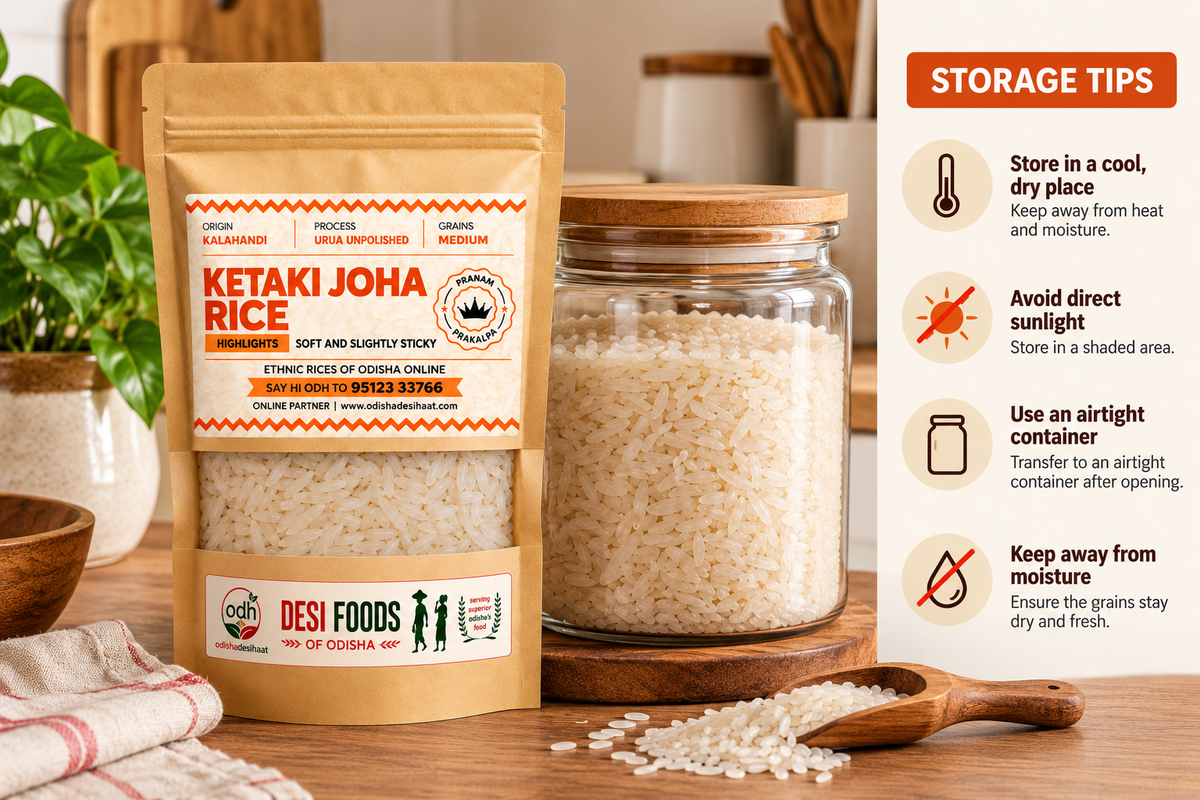
Store in a cool and dry place.

Keep away from direct sunlight and moisture.

Keep the package properly sealed after opening.

Transfer to an airtight food-grade container when required.

Always use a clean, dry scoop.

Follow the best-before period printed on the package.

FAQs

Everything you need to know before purchasing this product.

💬 7 Questions Answered
  • Ketaki Joha, also called Keteki Joha, is a traditional rice variety. This product is cultivated and sourced from Kalahandi, Odisha.
  • Ketaki Joha is a specific rice variety, while “Joha Rice” is a broader term covering a family of rice varieties traditionally associated with Assam.
  • No. This product is Ketaki Joha cultivated and sourced from Kalahandi, Odisha. It should not be confused with or marketed as Assam’s GI-registered Joha Rice.
  • The rice develops a soft, slightly sticky and naturally cohesive texture, making it particularly suitable for meals served with dal and curries.
  • It pairs particularly well with Dalma, dal, vegetable curries, saag and traditional home-style Indian gravies.
  • A good starting point is approximately 1 cup rice to 2 cups water for stovetop cooking. Adjust slightly according to the batch and your preferred softness.
  • Allowing the rice to rest for about 5 minutes after cooking helps the moisture settle and gives the grains their characteristic soft, cohesive texture.